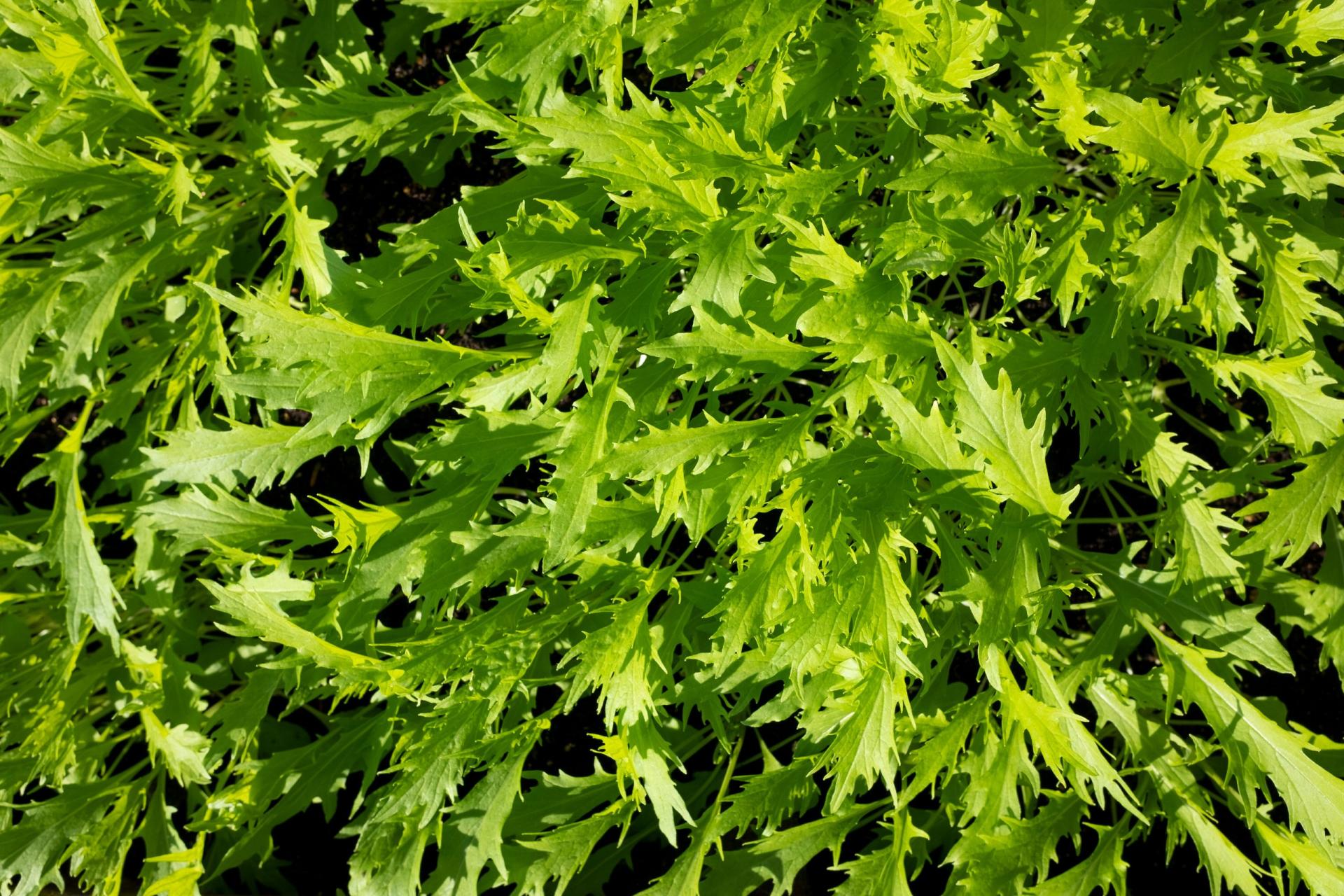



Mizuna and Mibuna are Japanese salad leaf vegetables in the Brassica family. They grow similarly to Pak Choi and Chinese Cabbage and can be eaten fresh in salads or lightly cooked.
Mizuna and Mibuna are easy to grow, giving you a harvest all year round with continual sowing. While a staple in oriental cuisine, it has increasingly become popular in western salads because of its mildly spicy flavour and a slight bitter undertone (similar to mustard greens). As cut-and-come-again crops, they’re grown not only for their fresh flavours but are a rich source of vitamins (A, C and K), calcium, iron and folate.
Are you interested in learning how to grow Mizuna and Mibuna? This guide covers everything you need to know about growing Mizuna and Mibuna in the UK allotments, from the right time to plant to growing tips and harvesting best practices.
Many first-time growers get confused when trying to grow Mizuna and Mibuna because of their nearly identical names. Here is how to tell them apart:
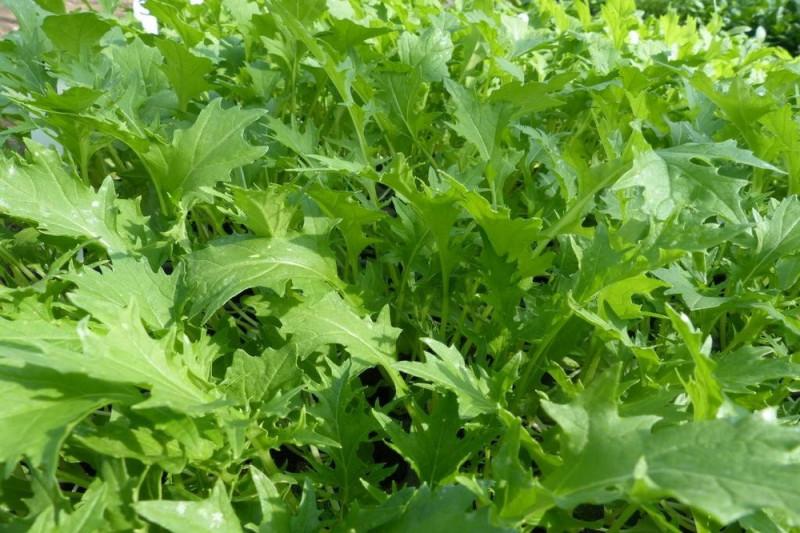

It is very easy to grow Mizuna and Mibuna because of their almost year-long season. You can sow Mizuna and Mibuna indoors from February onwards, or sow directly in moist soil from March onwards. They should be protected or planted out when the weather has warmed up - too cold, and they can bolt, too hot, and they will wilt quickly. Harden your plants off before planting permanently.
Mizuna and Mibuna can be planted in containers and in the ground. A staggered sowing will provide a continuous crop. Autumn and winter plants will require protection with cloches or fleece to grow or be moved indoors in a polytunnel or greenhouse.
When growing Mizuna and Mibuna in the UK, the small leaves are ready to harvest a month after sowing. If you let the plants mature, you can harvest the entire rosette in 6-8 weeks. Cutting 2 inches above the ground allows the plant to resprout.
Wondering when to pick Mizuna and Mibuna? As a cut-and-come-again crop, you can get multiple harvests from a single plant.
Mizuna and Mibuna have a mild mustard-like flavour and are a tasty addition to a mixed salad. More mature leaves can be used, lightly cooked or stir-fried. You can also consume the buds and flowers of the plant.
Do you want to grow Mizuna and Mibuna in your allotment or kitchen garden? At Allotment, we offer plant-specific tips and advice from both experienced and new growers alike.
Whether you are looking for tips on growing Mizuna and Mibuna or want to share your own growing experience and advice, our community platform is the right place to swap stories and strategies. Sign up and become a part of the Allotment Online community!
Looking for tips on growing salad leaves, blueberries and chestnuts? Visit our Grow Your Own page and find answers to more specific growing-related queries.